
Causes & hair-growth basics
Telogen Effluvium: Why Your Hair Falls Out in Clumps and How to Recover
Telogen effluvium can cause diffuse shedding months after a trigger. Learn about diagnosis, recovery and why tests and treatment should fit your situation.
By Maša
Published 11 min read

The short version
Telogen effluvium is diffuse shedding that can follow a trigger such as illness, childbirth or rapid weight loss. Recovery depends on the cause and can take months, while persistent or overlapping loss needs assessment. Testing and treatment should follow an individual clinical review rather than a universal supplement plan.
When Hair Falls Out in Clumps: Understanding Telogen Effluvium
You gather your hair into a ponytail and come away with a handful. The shower drain needs clearing twice a week. There is hair on your pillow, in your coffee, wound around the vacuum brush. When your hair is falling out in clumps, the question that arrives first is the biggest one: is this going to stop?

Telogen effluvium is one possible explanation for sudden diffuse shedding. A trigger can shift more hairs into the resting phase, with visible shedding arriving months later. The follicles are usually intact, but a clinician needs to distinguish this pattern from other causes of hair loss.
Acute shedding often settles as the body readjusts, while a continuing trigger or chronic condition can make it persist. The delay can be confusing: what you notice now may relate to an event months earlier, and other causes may coexist.
What Is Telogen Effluvium? The Science Explained Simply
Every hair on your head runs its own cycle, independently of the one beside it. That independence is normally what keeps shedding invisible.
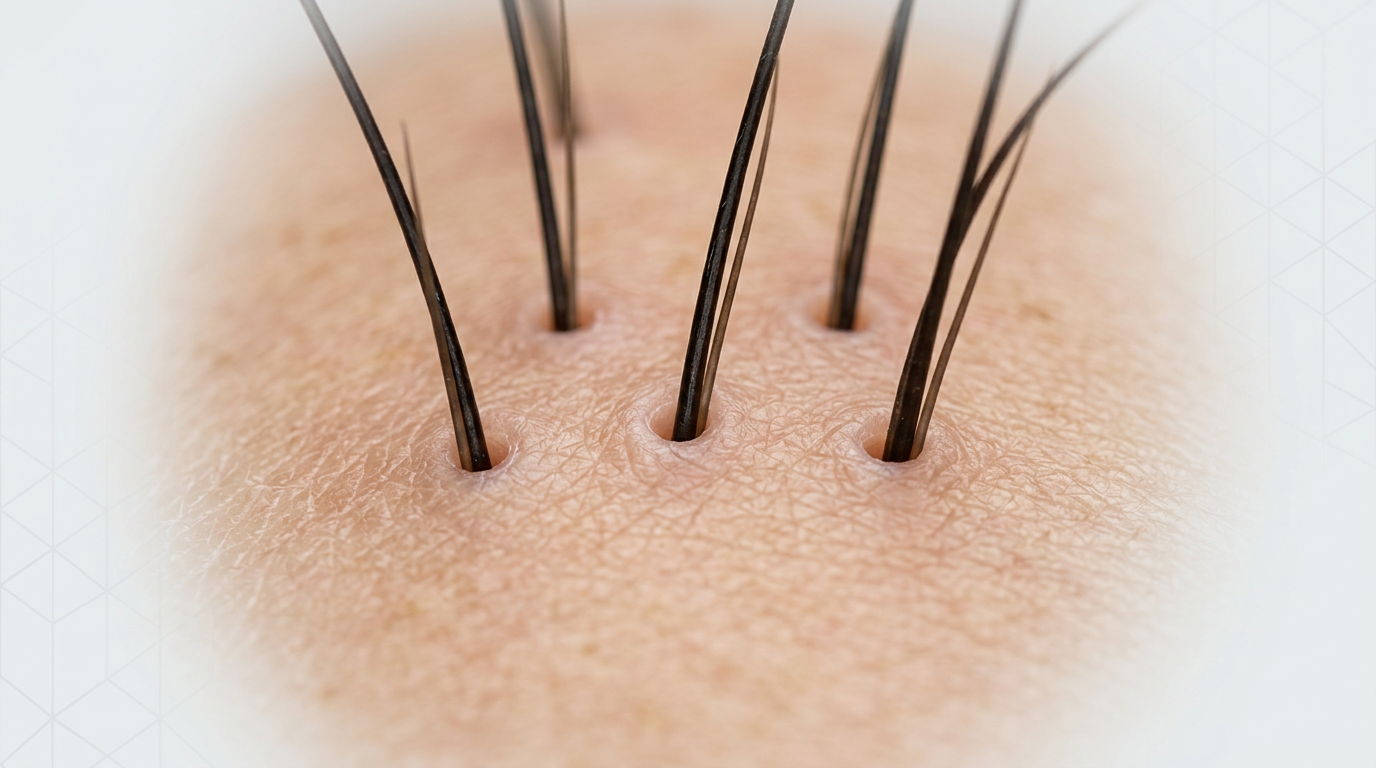
There are three phases. Anagen is active growth. It lasts years, and the overwhelming majority of your hair sits there at any given moment. Catagen is a brief transition of a couple of weeks, when active growth ends. Telogen is rest: the hair is finished, anchored loosely, waiting to be pushed out by the new hair forming underneath.
Some hairs are always resting while others grow. Shedding around 50 to 100 hairs a day is commonly described as normal, but the amount you notice varies with washing and brushing.
In telogen effluvium, more hairs than usual enter the resting phase and are shed months later. The American Academy of Dermatology (AAD) describes this delayed shedding after stressors such as illness or childbirth. A large handful alone cannot tell you the cause.
Acute telogen effluvium describes shedding lasting less than six months. Chronic telogen effluvium persists beyond that, sometimes for years, arriving in waves rather than one dramatic burst. These terms describe duration; they do not promise when your shedding will stop.
Telling it apart from other hair loss matters. Alopecia areata usually causes discrete round bald patches, but can also be diffuse. Androgenetic alopecia (genetic thinning) gradually shrinks follicles, producing finer hairs. Telogen effluvium typically causes diffuse shedding without that progressive miniaturisation, but more than one condition can be present. Ask a dermatologist to assess the pattern.
In 1996, David Whiting at the University of Texas Southwestern examined scalp biopsies from 355 people with unexplained diffuse thinning, 346 of them women, alongside 412 with androgenetic alopecia and 22 controls. In chronic telogen effluvium, 11% of terminal hairs were in telogen, against 6.5% in controls and 16.8% in androgenetic alopecia. Yet the ratio of thick hairs to miniaturised ones stayed near normal, 9:1 against 1.9:1 in genetic thinning. Those follicles were full-sized, and they were resting.

The Trigger List: What Causes Telogen Effluvium
Telogen effluvium can follow an event two to three months before shedding begins, though the delay varies. That history is a useful clue when your present month seems perfectly calm. Chronic telogen effluvium can also start without an identifiable trigger, as Whiting’s study described.
- Hormonal shifts. Pregnancy holds hair in anagen; delivery releases it, which is why the postpartum regrowth timeline is familiar territory for new mothers. Coming off hormonal birth control and the menopausal transition can do the same.
- Physical stress. Major surgery, a high fever, a serious infection, significant blood loss. COVID-19 joined this list fast: in late 2020, dermatologists at Montefiore Medical Center in the Bronx reported ten women who developed telogen effluvium after SARS-CoV-2 infection, presenting at the dermatology clinic three to seven months after the illness.
- Emotional stress. Bereavement, divorce, sustained anxiety, a job loss.
- Nutritional gaps. Iron deficiency and inadequate protein intake warrant attention. Studies have also examined zinc, vitamin D and B12, with mixed findings; shedding alone does not establish a deficiency.
- Thyroid disorders. Both underactive and overactive thyroid can disturb the cycle. Your symptoms and history help determine whether thyroid testing is relevant.
- Medications. Certain antidepressants, blood thinners, retinoids, beta blockers and anticonvulsants.
- Crash diets and rapid weight loss. The follicle is metabolically expensive, among the first things the body deprioritises.
In 2019, dermatologists in Chandigarh, India worked up 100 women presenting with non-scarring diffuse hair loss. Chronic telogen effluvium accounted for 62% of cases, female pattern hair loss for 22%, and acute telogen effluvium for 16%. Psychological stress was the identified precipitant in 18 women, low haemoglobin appeared in 57%, and subclinical hypothyroidism in 11%.

Diagnosis: How Doctors Identify Telogen Effluvium
The hair pull test is the bedside standard: your clinician grasps a small bundle of hairs and pulls gently along the shaft. In 2017, a University of Ottawa team ran it on 181 people to establish what normal actually is. The mean number of hairs removed per pull was 0.44, and 97.2% shed two hairs or fewer, so the group recommended lowering the positive threshold to more than two hairs. Washing and brushing beforehand made no significant difference in this group. The authors concluded that the five-day restriction on pretest washing could be reduced and brushing permitted.
Blood tests are selected from the history and examination. A clinician may investigate iron status, thyroid function or particular nutrient deficiencies when there is a reason to suspect them; every person does not need the same panel. Trichoscopy, which is your scalp viewed under magnification, lets a dermatologist see whether your hairs are uniformly thick, which points toward telogen effluvium, or variable in calibre, which points toward genetic thinning.
Sorting out the cause matters because shedding and genetic thinning can coexist, as the AAD explains. Treatment needs to address the conditions actually present. A treatment aimed at genetic thinning does not correct an iron deficiency, and correcting a deficiency does not address every cause of thinning.
Start with your primary care provider or a dermatologist if the amount or pattern of shedding concerns you. Assessment is especially useful for persistent changes, distinct patches, scalp symptoms or visible thinning; there is no requirement to wait six months before asking for help.
The Telogen Effluvium Recovery Timeline: What to Realistically Expect
For an acute episode, three to six months is a rough estimate for shedding to ease as the trigger passes, rather than a deadline. The AAD says normal fullness tends to return within six to nine months as excessive shedding subsides. Individual cases vary, and chronic shedding or coexisting loss can take a different course.
You may notice a baby hair phase, with short hairs along the hairline and part that refuse to lie flat. These can be regrowth, but short hairs can also reflect breakage or miniaturisation. They do not prove recovery on their own; photographs and a scalp examination give better context.
Telogen effluvium recovery can fluctuate. A further stressor can bring another episode, and the AAD notes that continuing stress can prolong shedding. Hair length also affects how quickly changes in fullness become noticeable. Ask for reassessment if the pattern changes or shedding persists.
In 2005, Rodney Sinclair at the University of Melbourne reported four women followed prospectively for at least seven years, plus a previously reported fifth woman. The four kept shedding in fluctuating waves, with no visible density reduction on serial photographs and no follicular miniaturisation on repeat biopsies. The fifth developed biopsy-confirmed female pattern hair loss within 18 months. Persistent shedding does not automatically mean progressive baldness, but this small series cannot predict your course.
Telogen Effluvium Treatment and Recovery: What You Can Actively Do
Treatment starts with identifying the cause and deciding what needs attention. There is no universal medicine or supplement plan for every episode, and treatment for another coexisting condition may be different.
Start by looking back over the months before your first heavy shedding day. An illness or operation may have passed, while a thyroid problem or restrictive diet may still need attention. Sometimes no trigger emerges. Review suspected medication effects with the prescriber; the AAD advises against stopping a suspected medicine without speaking to them.
The second step is correcting genuine deficiencies, and confirming first that they are genuine. In 2013, a Cairo University group measured serum ferritin and vitamin D2 in 80 women aged 18 to 45 with telogen effluvium or female pattern hair loss, against 40 with no hair loss. Ferritin in the telogen effluvium group averaged 14.7 µg/l versus 43.5 in controls; vitamin D2 averaged 28.8 nmol/l versus 118.2. Both were lower with greater hair-loss severity. These were associations, not results from a supplementation trial.
Discuss iron results with your provider rather than choosing a hair-growth target online. In 2024, Turkish dermatologists measured blood markers, hair density and anagen/telogen ratios by digital phototrichogram in 108 women with diffuse hair loss. This observational study does not establish an iron target or a supplementation or regrowth benefit.
Deficiency is not universal, though. Also in 2024, a case-control study at Afyonkarahisar Health Sciences University compared 90 women with chronic telogen effluvium against 90 without. Zinc was significantly lower and selenium significantly higher in the shedding group. Haemoglobin, ferritin, B12, vitamin D, thyroid function, copper and biotin showed no group difference. This was not a supplement trial: it cannot show that supplementation works or is ineffective. The authors recommended assessment and testing for suspected conditions.
More is not automatically better. A 2006 review found insufficient evidence to recommend universal iron screening in hair-loss patients or iron supplements for hair loss with iron deficiency but no anaemia. Those decisions require clinical judgment; insufficient evidence is not proof of no benefit. The review said iron-deficiency anaemia should be treated and warned that excess iron can cause overload.
Look after your general health and avoid adding breakage or tension: eat enough protein, keep a regular sleep routine, and handle your hair gently. These steps do not guarantee faster regrowth. If you are considering minoxidil, ask a clinician whether it fits your diagnosis, especially with coexisting genetic thinning; it is not an established treatment for every telogen effluvium episode.
Living With Telogen Effluvium: Practical Daily Tips
Longer gaps between washes can leave more loose hairs to appear on the next wash day, making one handful look alarming. Wash on a schedule that suits your scalp, use a wide-tooth comb on wet hair, and detangle from the ends upward.
For camouflage, a blunt cut and a side part hide thinning far better than long layers and a centre part. Root-lift mousse and dry texturising spray add apparent density; heavy conditioners flatten it. Toppers, root powders and keratin fibres are legitimate options for a hard event. Avoid clip-in extensions while shedding is active, because tension on already loosened hairs makes things worse.
To track changes, photograph your part in the same light monthly. If you record wash-day shedding, keep the interval between washes similar; counts vary and cannot diagnose the cause. Bring persistent changes to your clinician rather than waiting for a self-imposed deadline.
Recurrence: What to Watch For and When to Ask Again
Repeated shedding can reflect an ongoing problem such as iron deficiency, thyroid disease or sustained stress, but chronic telogen effluvium can also occur without an identifiable trigger. A new episode is a reason to revisit the history, rather than assume the previous cause still applies.
Keep a nutritional floor rather than reacting to shedding with supplements. If you menstruate heavily, eat a restrictive diet or have symptoms suggesting a deficiency, ask whether targeted assessment is appropriate. Routine repeat iron tests or winter vitamin D supplements are not a universal telogen effluvium plan. Keep the unglamorous fundamentals: sleep, movement, and not skipping meals when life is hardest.
Learn your own early signal, whether that is a thinner ponytail or more hair than usual on the pillow. Early assessment can help identify a treatable cause, but it does not guarantee a shorter episode. If shedding continues past six months, or episodes keep recurring, ask a dermatologist about chronic telogen effluvium specifically.
Key terms
- anagen
- The active growth phase of a hair follicle.
- telogen
- The resting phase of the hair cycle.
- trichoscopy
- Examination of the scalp and hair under magnification.
Quick answers
How long does telogen effluvium last?
Acute episodes often ease over roughly three to six months as the trigger passes. The AAD describes normal fullness tending to return within six to nine months as shedding subsides, but individual cases vary. Shedding beyond six months is classed as chronic; you can seek assessment sooner.
Will my hair grow back completely?
Acute telogen effluvium often resolves, and the condition itself is non-scarring. Complete recovery cannot be promised: continuing triggers, chronic shedding or coexisting genetic thinning can change the outcome. A dermatologist can distinguish shedding from other hair loss and assess overlap.
How much daily shedding is too much?
Around fifty to a hundred hairs a day is a common reference range, not a diagnostic cut-off. A sustained increase from your usual shedding, visible thinning or clumps warrants assessment, even if you cannot count the hairs accurately.
Can stress alone cause it?
Severe emotional stress is a recognised precipitant, though in a 2019 series of 100 women with diffuse hair loss in Chandigarh, India it was the identified trigger in fewer than one in five women. Discuss the pattern with a clinician rather than assuming stress is the only cause.
About Maša
Maša writes the Medyko blog’s hair guides together with the Medyko team. Every guide is researched against published studies and edited by the team before it goes live.
How we research and write our articlesSources
- 1.Chronic telogen effluvium: increased scalp hair shedding in middle-aged women — J Am Acad Dermatol, 1996
- 2.NonScarring Diffuse Hair Loss in Women: a Clinico-Etiological Study from tertiary care center in North-West India — J Cosmet Dermatol, 2019
- 3.Telogen effluvium: a sequela of COVID-19 — Int J Dermatol, 2021
- 4.Hair pull test: Evidence-based update and revision of guidelines — J Am Acad Dermatol, 2017
- 5.Chronic telogen effluvium: a study of 5 patients over 7 years — J Am Acad Dermatol, 2005
- 6.Serum ferritin and vitamin d in female hair loss: do they play a role? — Skin Pharmacol Physiol, 2013
- 7.Evaluation of the relationship of digital phototrichogram findings of patients with diffuse hair loss with blood TSH, ferritin and vitamin B12 levels — North Clin Istanb, 2024
- 8.A comprehensive investigation of biochemical status in patients with telogen effluvium: Analysis of Hb, ferritin, vitamin B12, vitamin D, thyroid function tests, zinc, copper, biotin, and selenium levels — J Cosmet Dermatol, 2024
- 9.The diagnosis and treatment of iron deficiency and its potential relationship to hair loss — J Am Acad Dermatol, 2006
- 10.Do you have hair loss or hair shedding? — American Academy of Dermatology
This article is general information, not medical advice. If you’re worried about hair loss or your health, talk to a doctor or a dermatologist.


