
Causes & hair-growth basics
The Hair Growth Cycle Explained: Anagen, Catagen, and Telogen Phases
Learn the hair growth cycle phases, how long growth and rest last, and why shedding can follow a trigger months later. Includes a phase table and timing guide.
By Maša
Published 10 min read

The short version
Anagen is growth, catagen is transition, telogen is rest and exogen is release. A visible shed can follow its trigger months later, and shedding can overlap with new growth or pattern thinning. Phase timing cannot diagnose the cause or set a universal treatment deadline.
The hair growth cycle phases explain how a hair grows for years, rests for months, then falls while its follicle prepares another hair. Anagen is growth, catagen is transition, telogen is rest, and exogen is release. Resting and shedding are related, but they are different events.
That distinction helps when you notice more hair in your brush. A shed can reflect something that happened months earlier. It does not, on its own, tell you whether your follicles are shrinking or whether a treatment is working.

Why do the hair growth cycle phases matter?
They help separate a change in timing from a change in the hairs your follicles produce. Stenn and Paus's review, Controls of hair follicle cycling, describes how human follicles follow their own rhythms. Neighbouring hairs can be at different stages, so ordinary renewal happens across your scalp without everything falling together.
When more follicles leave growth around the same time, that balance changes. You can notice a surge of shedding later, after those hairs have passed through transition and rest. In pattern thinning, the growing period shortens and follicles produce finer hairs over successive cycles. These processes can overlap.
The guide to thinning hair in women covers the broader signs and causes. This article stays with timing, stage by stage, and with what each stage says about when the hair in your brush stopped growing and let go.
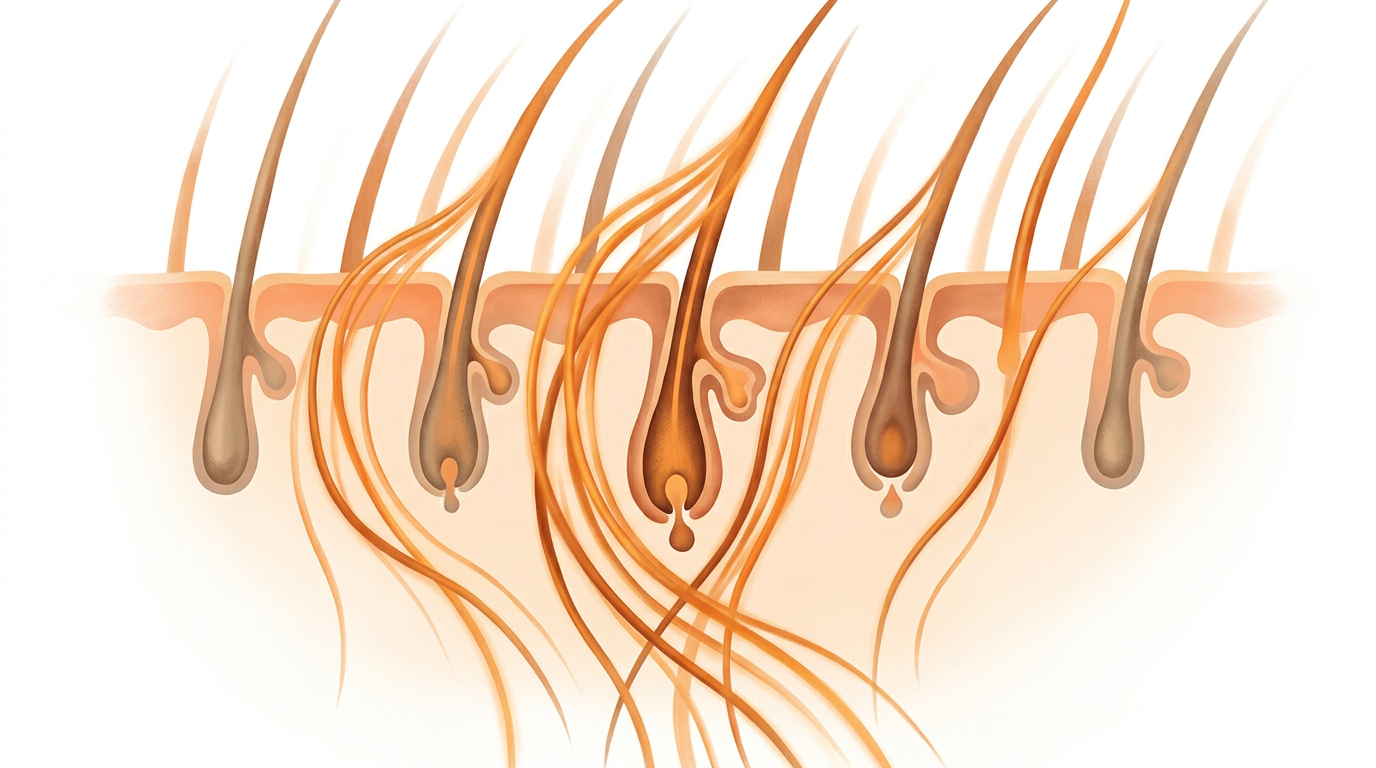
Phase comparison
The approximate durations below come from the full-text biology section of the review Hormonal Effects on Hair Follicles. They describe scalp hair, not eyebrows or eyelashes, and are reference ranges rather than measurements of your own follicles.
| Phase | What happens | Approximate timing | What it helps explain |
|---|---|---|---|
| Anagen | The follicle produces a growing hair shaft. | 2 to 7 years | Why a full scalp-hair cycle takes years. |
| Catagen | The lower follicle regresses and active shaft growth ends. | About 3 weeks | Why stopping growth does not mean immediate shedding. |
| Telogen | The follicle rests while retaining its club hair. | About 3 months | Why a trigger and a visible shed can be months apart. |
| Exogen | The old shaft releases. | No separate fixed duration given here | Why releasing an old hair is different from producing a new one. |
What happens during anagen?
During anagen, cells near the root divide to produce the hair shaft. The hormonal review gives a conventional estimate of 85 to 90% of scalp hairs being in this growing phase at a time. It describes scalps across a population. You can't count it in your own mirror.
Anagen duration and growth speed answer different questions. Duration is how long one hair keeps growing before its follicle transitions. Speed is how much length that hair gains while it grows.
In a small study published in 2004, Dominique Van Neste examined scalp hairs from 12 menopausal women reporting hair loss and 12 younger women without that complaint. White hairs grew at an average of 0.38 millimetres a day and pigmented hairs at 0.35 millimetres a day. Those figures work out to roughly a centimetre over a month in that sample. They describe those 24 women and give your own hair no target to hit.
Multiply growth speed by time in anagen and you get a theoretical length. The hair that stays on your head has also been through cutting and breakage, so that sum can't explain why your ends keep breaking. It can't tell you how long your own anagen lasts either, and it doesn't prove that genetics alone sets the length you retain.
If length is your concern, describe both parts at an appointment: whether you notice growth near the roots and whether the ends keep snapping. A length calculation cannot distinguish them.
What happens during catagen?
Catagen is the short transition after active growth. The lower part of the follicle regresses, and the shaft separates from its growth-producing connection at the base. The hair remains held in the follicle while it develops the club-shaped root associated with a resting hair.
This is ordinary renewal, not evidence that the follicle has died. Stenn and Paus describe the follicle as a regenerating organ that repeatedly passes through growth, regression and rest.
So a hair can stop lengthening well before it leaves your scalp. The first extra hairs you notice in the shower cannot tell you the day their growth stopped.

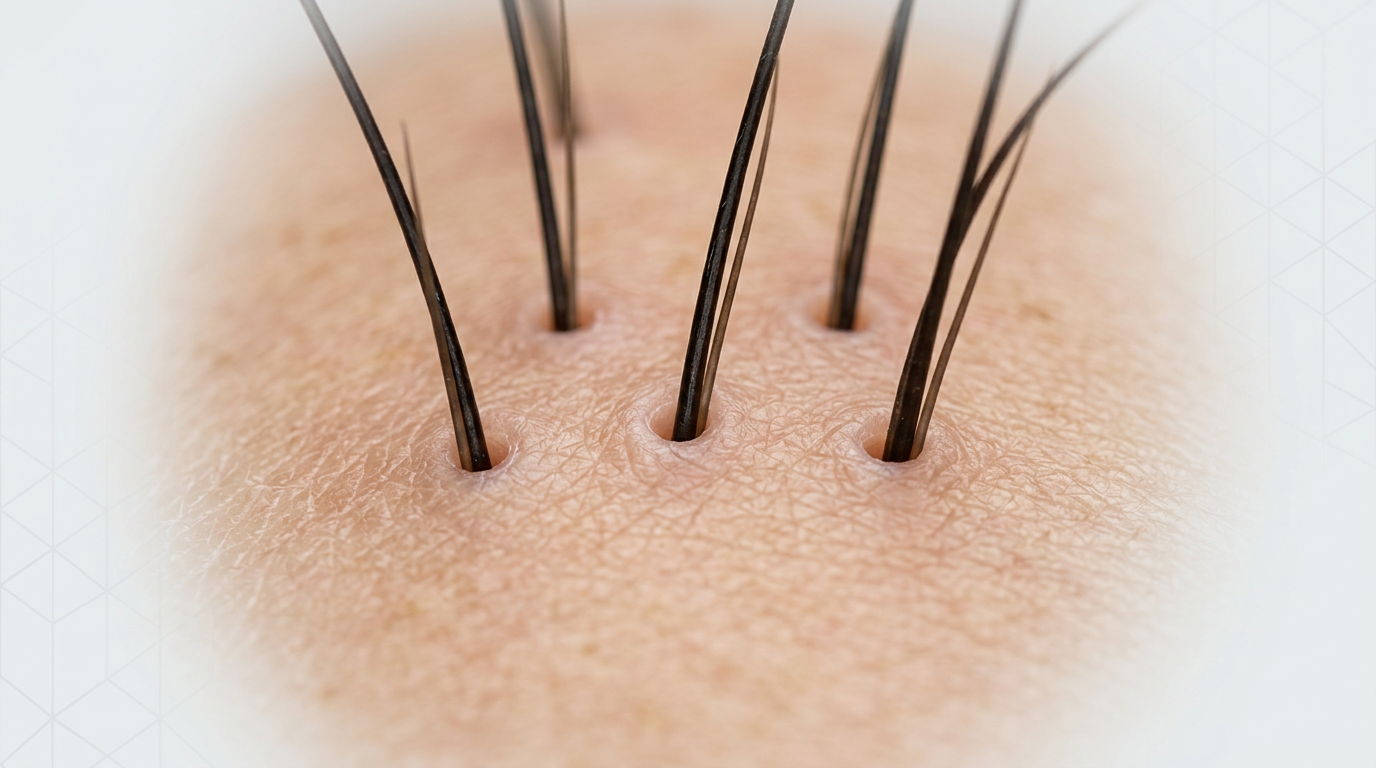
A hair with an enlarged root end, as pictured here, is different from the living follicle within your skin. The illustration cannot establish which phase a particular shed hair came from.
What happens during telogen?
During telogen, the retained hair has stopped growing. Resting hairs belong on a healthy scalp. Their presence does not mean that every resting follicle needs restarting.
Telogen effluvium is excessive shedding of resting hairs. In his 2019 review, Alfredo Rebora describes its delayed appearance after a trigger and its frequent overlap with pattern hair loss. A calendar helps you piece together the history, but timing alone does not establish the cause.
Approximate trigger-to-shedding timeline
| Point in the sequence | What may be happening | What you can record |
|---|---|---|
| A possible trigger occurs | Childbirth, illness, a medicine change or another event precedes a change in cycling. | The event and its date, including when a medicine started or stopped. |
| The following weeks | Affected hairs leave growth and pass through transition into rest. | Your scalp can still look much as it did before. |
| Often around 3 to 4 months later | A delayed telogen shed becomes noticeable. | When shedding increased and whether it affects the whole scalp. |
| The months after shedding begins | Shedding and new growth can overlap; the course depends on the cause. | Whether shedding settles and whether the part keeps widening. |
This is an approximate sequence for a delayed telogen shed, not a countdown for every kind of hair loss. Rebora gives 2 to 4 months after childbirth, while some post-fever shedding has been reported earlier. Repeated triggers and ongoing illness can make the starting point unclear.
Look back over the preceding months rather than settling on one stressful day and treating it as the diagnosis. Bring the dates, your medication list and any illness or dietary changes to the clinician assessing the shed.
Rebora also questions what shedding threshold should define the condition. A home count does not reproduce a standardised clinical wash test. Describe the change from your usual shedding instead of treating a familiar daily hair-count number as a pass or fail.

How is exogen different from telogen?
Exogen describes the release of the old hair shaft; telogen describes the resting stage. A new growing hair and an old retained hair can be present together, so release is not a reliable signal that growth has stopped beneath it.
Guarrera and Rebora examined shed-hair roots from 25 women in their 2017 study, Exogen Hairs in Women with and without Hair Loss. The sample included women without hair loss, with pattern loss, with telogen effluvium and with both. They found no statistically significant difference in the proportion of roots they classified as exogen between groups.
That small morphological study does not make the shape of a hair in your brush a diagnostic test. It supports keeping release separate from the earlier changes that influence cycling. A visible root end is also not proof that you have lost the living follicle that produced the hair.
How do hormones affect the cycle?
Hormones influence cycling, but a change in your hair does not automatically mean a hormone level is too high or too low. The evidence differs across pregnancy, thyroid function and pattern thinning.
Pregnancy and postpartum changes
Gizlenti and Ekmekci compared 116 women at different stages of pregnancy or after birth. Their 2014 study found a lower proportion of anagen hairs and a higher proportion of telogen hairs at four months postpartum than in the pregnancy groups.
These were comparisons between groups, not repeated measurements following every participant through pregnancy and recovery. They demonstrate a difference in phase balance. They do not show that every new mother will shed heavily or that one hormone measurement predicts her course. If shedding follows childbirth, record the birth date and onset rather than assuming it must start in a particular week.
Pattern thinning
Bhat and colleagues' review Female Pattern Hair Loss-An Update describes shorter anagen phases and progressively finer hairs in female pattern hair loss. This miniaturisation differs from simply releasing more full-size resting hairs.
DHT, a hormone pressure that can slowly shrink susceptible follicles, is part of the androgen story. The review also says the role of androgens in women's pattern loss remains incompletely understood, and the condition can occur with normal circulating androgen levels.
A widening part therefore deserves assessment even when blood hormone results are normal. Going the other way, extra shedding on its own doesn't establish miniaturisation. A clinician can examine hair thickness and distribution to help distinguish the processes.
Thyroid hormones
In 2008, van Beek and colleagues cultured scalp follicles obtained from women aged 40 to 69 undergoing facelift surgery. T4 prolonged anagen in the cultured follicles. This was an organ-culture experiment, not treatment of women with hair loss.
It establishes that human follicles respond directly to thyroid hormones under laboratory conditions. It does not show that taking extra thyroid hormone improves hair growth. If thyroid dysfunction is a concern, ask whether testing fits your symptoms and history.
Does the season tell you when to start treatment?
The seasonal evidence does not establish a best starting season. Kunz and colleagues retrospectively reviewed records from 823 apparently healthy women who complained of hair loss. Their 2009 study found the highest proportion of telogen hairs in summer, a smaller apparent peak in spring and the lowest proportion in late winter.
It measured hair-phase proportions in women attending in different seasons. It did not follow every woman through the year, compare spring treatment with autumn treatment, or test vitamin D as the explanation.
So write down when a change began, and let a clinician weigh the calendar alongside the rest of your history. The month gives that change some context. It gives you no reason to put off an assessment until spring, and it doesn't turn a new shed into a seasonal one.
How should you judge changes over time?
Judge them against the diagnosis and the outcome being measured. Less shedding, more visible short hairs, increased shaft thickness and greater scalp coverage are different observations. They need not change together.
For example, Anne Lucky and colleagues' randomised trial enrolled 381 women with female pattern hair loss and compared topical minoxidil solutions with placebo over 48 weeks. The 5% solution outperformed placebo on the trial's three primary outcomes at week 48.
That is evidence about a specific treatment, condition and assessment point. Week 48 tells you when this trial looked, not the earliest anything can change, and it sets no timetable for other interventions. Nor do all follicles need to finish a whole cycle first. That would mean waiting years, because a full scalp-hair cycle includes years of anagen.
Ask what improvement would look like in your case and when to review it. If you take comparison photographs, keep the part, lighting and camera angle consistent and note treatment or health changes beside them. Photographs help describe a trend; they do not identify its cause.
There is no need to wait out a generic growth-cycle deadline before seeking help with a new or worsening change. Bring the timeline you have kept: the possible trigger, when the shedding started, how your part has changed. A clinician still has to examine your scalp to work out what is changing and why.
From Medyko

Grow & Glow - Hair Growth Serum
Leave-in scalp serum with peptides, red clover and caffeine
€26.90
View productKey terms
- anagen
- The growing phase, when the follicle produces the hair shaft.
- catagen
- The short transition when the lower follicle regresses and active shaft growth ends.
- telogen
- The resting phase, when the follicle retains a hair that has stopped growing.
- exogen
- The release of the old hair shaft, distinct from the resting stage.
Quick answers
Can a trigger affect shedding months later?
Yes. In a delayed telogen shed, affected hairs pass through transition and rest before release. The timing varies with the cause.
Is spring the best time to start treatment?
The seasonal study did not compare treatment starting seasons. Its findings are no reason to delay assessment until spring.
Does every treatment require the same waiting period?
No. A trial endpoint applies to its treatment, condition and measured outcome. Agree on a review point with the clinician assessing your own hair change.
About Maša
Maša writes the Medyko blog’s hair guides together with the Medyko team. Every guide is researched against published studies and edited by the team before it goes live.
How we research and write our articlesSources
- 1.Controls of hair follicle cycling — Physiological Reviews, 2001
- 2.Hormonal Effects on Hair Follicles — International Journal of Molecular Sciences, 2020
- 3.Thickness, medullation and growth rate of female scalp hair are subject to significant variation according to pigmentation and scalp location during ageing — European Journal of Dermatology, 2004
- 4.Telogen effluvium: a comprehensive review — Clinical, Cosmetic and Investigational Dermatology, 2019
- 5.Exogen Hairs in Women with and without Hair Loss — Skin Appendage Disorders, 2017
- 6.The changes in the hair cycle during gestation and the post-partum period — Journal of the European Academy of Dermatology and Venereology, 2014
- 7.Female Pattern Hair Loss-An Update — Indian Dermatology Online Journal, 2020
- 8.Thyroid hormones directly alter human hair follicle functions: anagen prolongation and stimulation of both hair matrix keratinocyte proliferation and hair pigmentation — The Journal of Clinical Endocrinology and Metabolism, 2008
- 9.Seasonality of hair shedding in healthy women complaining of hair loss — Dermatology, 2009
- 10.A randomized, placebo-controlled trial of 5% and 2% topical minoxidil solutions in the treatment of female pattern hair loss — Journal of the American Academy of Dermatology, 2004
This article is general information, not medical advice. If you’re worried about hair loss or your health, talk to a doctor or a dermatologist.
Keep reading


From Medyko
Grow & Glow - Hair Growth Serum
Leave-in scalp serum with peptides, red clover and caffeine
€26.90
View product