
Hair care & styling
Scalp Massage for Hair Growth: Does It Work?
Discover if scalp massage for hair growth really works with science-backed tips. Learn simple techniques, routines, and how to combine it with serums for thicker, healthier hair in just 4 minutes a day.
By Maša
Published 11 min read

The short version
Scalp massage can support hair growth by improving circulation, but results vary. Learn proven methods, timing, and how to combine it with serums for better outcomes.
Ever wondered if a simple scalp rub could thicken your hair?
If you've been dealing with thinning hair or just want to encourage more growth, you've probably heard about scalp massage for hair growth. It's one of those tips that sounds almost too easy to be true—like, can just rubbing your head really make a difference? Well, in my experience working with women facing hair concerns, I've seen how this gentle practice can be a game-changer when done right. Studies suggest that just 4 minutes of daily scalp massage increased hair thickness by up to 24% in one small trial. But it's not magic; it's about boosting blood flow to your follicles. In this guide, we'll break down the science simply, share practical techniques you can try today, and set realistic expectations so you know exactly what to expect. Let's get your scalp feeling good and your hair looking fuller.
Does scalp massage actually work?
Many women I've chatted with are skeptical at first—'Is scalp massage for hair growth just another trend?' But from what we've observed in real-life routines, yes, it can make a modest but noticeable difference. The key is improved blood circulation to the hair follicles. When you massage your scalp, you're essentially waking up those tiny blood vessels, delivering more oxygen and nutrients where your hair needs them most.
In our experience, women who incorporate this into their daily habits often report less shedding and a bit more density over time. It's not going to turn sparse hair into a mane overnight, but it supports the growth cycle by reducing tension and promoting a healthier scalp environment. Think of it as a gentle nudge for your follicles to stay active. If you're noticing slowdowns from stress or styling, this could be a low-effort way to help. For more on building a supportive routine, check out our post on the ultimate hair care routine for healthy hair growth. Start small, and you'll likely feel the relaxation benefits right away, which indirectly helps hair health too.
The science behind it
Let's keep it straightforward—no need for a lab coat here. Research has shown that scalp massage can positively impact hair thickness. Take that 2016 Japanese study with nine men who massaged their scalps for 24 weeks; they saw an average 24% increase in hair thickness. While the sample was small, it points to real mechanisms at play.
The main idea? Massaging stretches the skin around your follicles, which may signal them to produce thicker strands. Plus, it ramps up blood flow, carrying essential nutrients like vitamins and proteins to the roots. Studies suggest this also helps with gene expression related to hair growth cycles, keeping more follicles in the active phase longer.
From a practical standpoint, many women notice their scalp feels less tight after regular sessions, which can prevent breakage from daily tension. It's not dramatic like some treatments, but the measurable changes make it worth trying. Combine it with good habits, and you're giving your hair a solid foundation.
How long and how often
Consistency beats intensity every time when it comes to scalp massage for hair growth. Based on that Japanese study, 4 minutes a day was enough to see results—no hours-long sessions required. Aim for 4-5 minutes daily if you can; even 2-3 minutes works if you're short on time.
Do it every day for the best shot at benefits, but if that's tough, three to four times a week still helps maintain circulation. Mornings might energize you, evenings can relax you before bed, or slip it in during your shower. The key is making it a non-negotiable part of your routine, like brushing your teeth.
In my talks with clients, those who stuck with it for at least a month started seeing subtle shifts, like hair feeling stronger. Track your progress with photos every two weeks. Remember, patience is part of the process—your scalp needs time to respond.
The proper technique
Getting the technique right ensures you're actually helping, not just scratching an itch. Use your fingertips—not nails—to apply firm but gentle pressure. Think of it like kneading dough: steady circles that cover the area without pulling hair.
Start with light pressure to get comfortable, then build to what feels good. Circular motions work best, about the size of a quarter, moving systematically across your scalp. Avoid aggressive tugging, which can stress follicles. Breathe deeply to make it relaxing.
Many women find it easier sitting comfortably or lying down. If your scalp is sensitive, start slower. This method improves blood flow without irritation, and over time, it can make your scalp more resilient. Practice makes it second nature, and soon you'll feel the warmth from increased circulation.
Step-by-step scalp massage
Ready to try? Here's a simple 4-minute routine to follow for scalp massage for hair growth. Divide your scalp into sections for even coverage.
-
Hairline: Place fingertips at your forehead and massage in small circles backward for 30-60 seconds. This targets the front growth area.
-
Temples: Move to the sides, circling outward toward your ears. Spend 30 seconds here to ease tension.
-
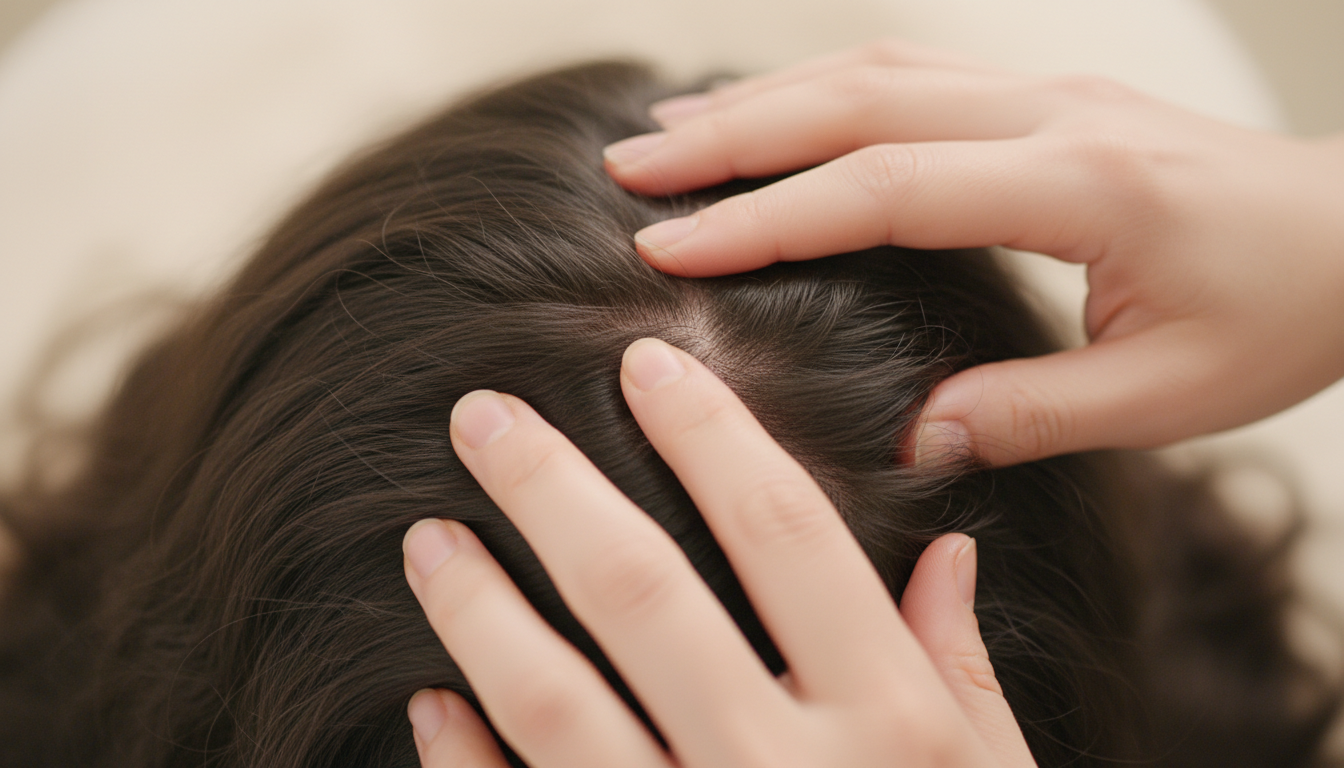
Crown and vertex: At the top, use both hands for broader circles, 45-60 seconds. This is prime real estate for thickness.
-
Back of head: Reach up or use a mirror; circle from the crown down for 45 seconds.
-
Nape of neck: Finally, massage the base where neck meets scalp, 30-60 seconds, to release buildup.
Do this daily, and adjust based on what feels best. Women often say the crown section makes the biggest difference for visible fullness.
With or without oil?
You can go either way—both have perks for scalp massage for hair growth. Dry massage is mess-free and doable anytime; it's great for quick daily sessions and still boosts circulation effectively.
With oil? Save it for a weekly deeper treatment. A light carrier like jojoba or argan nourishes dry scalps and helps your fingers glide. Just a few drops prevent tangles and add moisture. Avoid heavy oils if your scalp is oily, as they might clog pores.
In practice, dry works for mornings, oil for evenings. If using a growth serum, massage it in oil-free to let it absorb. Experiment to see what your scalp loves—many find oil enhances the relaxing feel without overdoing it.
📊 Not sure what's causing your hair concerns?
Take our 2-minute hair analysis quiz to get personalized product recommendations based on your unique hair type, scalp condition, and lifestyle.
Start your free hair analysis →
Massage tools vs fingers
Fingers are my top recommendation for scalp massage for hair growth—they're free, precise, and let you feel tension spots. You control pressure intuitively, making it personal and effective.
Tools like silicone scalp massagers or gua sha can add variety, especially for deeper reach. They're handy if fingers tire quickly, but not essential. Shampoo brushes during washes offer gentle stimulation without extra steps.
From experience, beginners stick with fingers to learn the motions, then try tools for fun. Tools might intensify benefits for some, but fingers build the habit best. Choose based on comfort; the goal is consistent touch, not gadgets.
Best time to massage
Timing can make scalp massage for hair growth feel seamless. Evenings are popular for winding down—pair it with reading or TV for relaxation. Mornings kickstart circulation if you're an early riser.
In the shower, while shampooing, it's effortless and cleans as you go. Post-serum application is ideal too, as massage helps it penetrate.
Busy schedules? Stack it with brushing or detangling. Women in our community love evening routines for better sleep, which indirectly supports hair. For more tips on timing your hair care practices, see our guide on morning vs evening hair care: when to do what. Pick what fits your day; consistency trumps perfect timing.
Combining with growth serum
For amplified results, pair scalp massage for hair growth with a targeted serum like Medyko's Grow & Glow. Apply a few drops to your scalp first, then massage it in using the techniques we covered. This works the serum deeper into follicles, enhancing absorption.
The synergy? Massage boosts blood flow while the serum nourishes with peptides and vitamins. Many notice faster improvements in density this way. Do it daily after your shower or at night. It's a simple upgrade that feels luxurious without extra time.
Pressure points for hair growth
Drawing from traditional practices like Chinese medicine, targeting specific points can enhance scalp massage for hair growth. The temples (GB-15 point) relieve stress-related shedding—circle gently for 30 seconds.
The crown (GV-20 point) supports overall vitality; press and release rhythmically. These aren't cures but can complement your routine by easing blockages.
Incorporate them into your step-by-step: add 20 seconds per point. Women report a calming effect that might indirectly aid growth. Keep it light—it's about flow, not force.
Realistic expectations
Scalp massage for hair growth isn't a miracle, but a supportive tool. Expect modest gains like 10-20% thicker strands over months, not instant volume. It shines as part of a bigger picture: balanced diet, gentle care, stress management.
If hormonal issues or genetics are at play, it may slow loss but not reverse fully. Track subtly—less fallout in your brush is a win. Patience pays; many see changes by week 8. If no progress after three months, chat with a pro. It's empowering, not overwhelming. To debunk common misconceptions around growth, read our article on hair growth myths busted: what actually works.
Making it a habit (routine stacking ideas)
Building the habit is easier when you stack it with existing routines. Link your 4-minute massage to morning coffee—do it while sipping. Or evening wind-down: massage during face cream application.
Shower stack: While conditioner sits, give your scalp attention. App reminders help at first. Reward yourself post-session with a favorite playlist. For evening routines, combine with serum for a mini ritual.
Track in a journal: note how your scalp feels. Over time, it becomes automatic, like many women who've made it non-negotiable. Small stacks lead to big consistency.
Frequently asked questions
How soon can I expect results from scalp massage for hair growth?
Results vary, but many notice less shedding in 4-6 weeks with daily practice. Thicker hair might take 2-3 months, as growth cycles are slow. Consistency and combining with nourishing products help speed things up. Be patient and track changes.
Is scalp massage safe for all hair types?
Yes, it's gentle for most, but use light pressure if you have a sensitive scalp or conditions like psoriasis. Avoid if you have open sores. Start slow and stop if irritated. Consult a doctor for underlying issues.
Can scalp massage cause hair loss?
Not if done properly—gentle motions support growth. Overly aggressive pulling might stress strands, so stick to fingertips and circles. In our experience, it reduces breakage when consistent.
What's the best oil for scalp massage?
Light ones like jojoba or argan suit most; they're non-greasy and moisturizing. Rosemary-infused can add stimulation. Test a patch first. Dry massage works too if you prefer no oil.
Does scalp massage work for men too?
Absolutely—the benefits from circulation apply to everyone. Men often see similar thickness gains. Adapt the routine to shorter hair if needed.
Can I do scalp massage while pregnant?
Generally safe, but check with your doctor, especially if using oils. It can ease tension headaches too. Keep it gentle.
How does scalp massage compare to minoxidil?
It's natural and complementary—massage enhances absorption if using topicals. Not as potent alone, but great for maintenance without side effects.
What if my scalp is oily—should I still massage?
Yes, dry massage helps distribute natural oils evenly. It may balance production over time. Cleanse gently afterward if needed.
Can kids benefit from scalp massage?
For healthy growth, light versions are fine from age 5+, but keep it fun and short. Avoid if scalp issues present.
Does electric scalp massagers work better?
They can add vibration for deeper stimulation, but fingers are equally effective for most. Try if you want variety; consistency matters more.
Key takeaways
- Massage your scalp 4-5 minutes daily using fingertips in circular motions for improved circulation.
- Combine with Medyko Grow & Glow Serum to enhance absorption and nourish follicles.
- Set realistic goals: expect modest thickness gains over 2-3 months with consistency.
- Stack the habit with routines like showering or evenings for easy integration.
- Target key areas like crown and temples for targeted benefits.
- Dry or with light oil—choose what fits your lifestyle without mess.
- Track progress monthly to stay motivated and adjust as needed.
About Maša
Maša writes the Medyko blog’s hair guides together with the Medyko team. Every guide is researched against published studies and edited by the team before it goes live.
How we research and write our articles

